World War II
Silent SpringWorld War II was a turning point in the history of pesticides described in the book: chemicals developed in the context of chemical warfare were found to kill insects, and the discovery helped give rise to a rapidly expanding synthetic-insecticide industry. The ensuing postwar embrace of long-lasting poisons did not remain confined to wartime laboratories or narrowly defined targets. It shaped agricultural and public control programs, altered habitats, and left communities facing consequences that could outlast the spraying itself.
Wartime Origins and Postwar Expansion
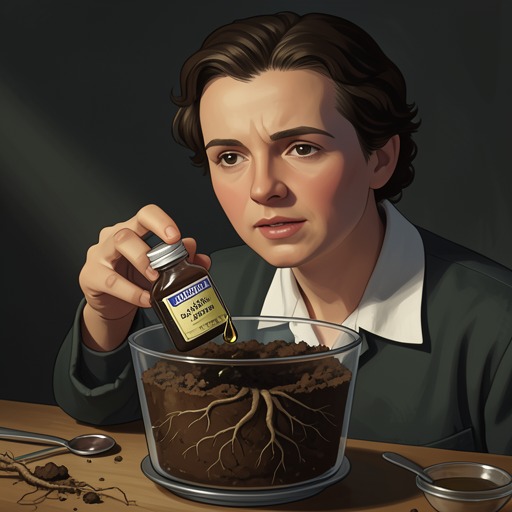
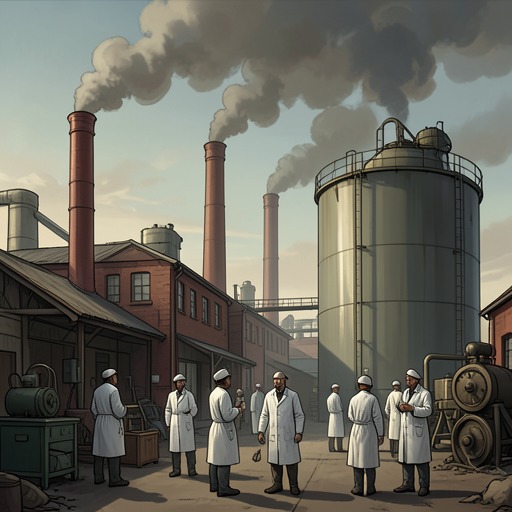
The book identifies the synthetic chemical industry as a child of World War II. During the development of chemical-warfare agents, laboratory compounds were found to be lethal to insects. This connection was not accidental: insects had been used to test chemicals intended as agents of death for humans. The resulting industry produced what the book describes as a seemingly endless stream of insecticidal chemicals, helping transform wartime research into an expanding peacetime capacity for chemical control.
The shift was also chemical. World War II marked a turning away from inorganic pesticides toward compounds built around the carbon molecule, though older substances did not disappear. Arsenic, for example, persisted as a basic ingredient in a variety of weed and insect killers. The change therefore meant not a clean break with earlier poisons, but the addition of new kinds of synthetic chemicals to an already hazardous store of pest-control materials.
From Wartime Chemicals to Public Programs
After the war, long-lasting poisons such as DDT became widely used in agricultural control programs. Rachel Carson and her scientific colleagues were alarmed by the scale of this use. Carson had tried soon after the war to interest a magazine in an article about the dangers, but could not find a publisher. A decade later, as pesticide and herbicide spraying caused extensive destruction of wildlife and habitat and threatened human life, she again sought to publish an account. Even her standing as a well-known writer did not overcome publishers’ fear of losing advertising; one canned baby-food manufacturer objected that such an article would cause unwarranted fear among mothers who used the product.
The book places these decisions against the broader postwar spread of chemical control. Spraying became a tool not only of farming but of public programs aimed at suppressing pests. In the fall of 1959, for instance, 27,000 acres in southeastern Michigan, including numerous suburbs of Detroit, were heavily dusted from the air with aldrin pellets. This later campaign illustrates the scale and reach of the chemical-control approach that had taken shape in the years after the war.
Landscapes Remade by Control
The effects of chemical control are presented not as isolated losses but as changes to relationships among plants, animals, and land. On the high western plains and the lower mountain slopes, sage had developed within a landscape shaped by severe climatic extremes. The pronghorn antelope and the sage grouse were likewise adapted to that habitat. Yet land-management agencies, seeking to meet cattlemen’s demand for more grazing land, treated sage as an obstacle to grass production. The intended improvement thus began by replacing a landscape’s established structure with a single preferred use.
The book emphasizes that broad spraying harms plants beyond its intended target. In the Bridger National Forest in Wyoming, the United States Forest Service sprayed about 10,000 acres of sage country after pressure from cattlemen. Willows, along with the beavers dependent on them, were also affected by the same indiscriminate spray. The area had been valued for recreation as well as for fishing and hunting; when William O. Douglas visited in 1959, the year of the spraying, he found the willows shriveled and dying. The episode makes visible a central consequence of the postwar control mindset: a treatment directed at one component of a landscape could undo other parts of the system on which wildlife and people depended.
Recurrence, Uncertainty, and the Chemical Treadmill
The book also links the legacy of wartime and postwar spraying to the return of pest problems when chemical programs are interrupted. On Nissan Island in the South Pacific, intensive spraying during World War II was stopped when hostilities ended. Malaria-carrying mosquitoes soon reinvaded. Their predators had been killed, and new predator populations had not had time to become established, leaving conditions in which the mosquitoes could multiply rapidly. The episode shows how suppression can weaken the ecological checks that might otherwise restrain a pest after treatment ceases.
This sequence gives force to Marshall Laird’s comparison of chemical control to a treadmill: once started, it can appear impossible to stop for fear of the consequences. The book’s historical argument is not simply that wartime research introduced new chemicals. It is that the machinery and assumptions of control persisted into peacetime, while their effects spread through habitats and food-producing systems. Even after a control program had been launched, basic questions could remain unanswered: research into heptachlor’s properties came only after a program began, and a 1959 survey in Louisiana and Texas found no tests had been made to establish whether milk was contaminated with pesticides. The wartime turning point thus leads to a continuing problem of decision and knowledge: the capacity to apply chemicals expanded faster than the ability to anticipate, measure, or reverse all their consequences.